Three colleagues have asked me about how we organize the SQUARE retreats. None of this is revolutionary, but when three people ask independently, it makes sense to write it up. Let’s reframe research retreats from dense seminars of talks to mostly quiet work with enough structure to keep people accountable and effective.
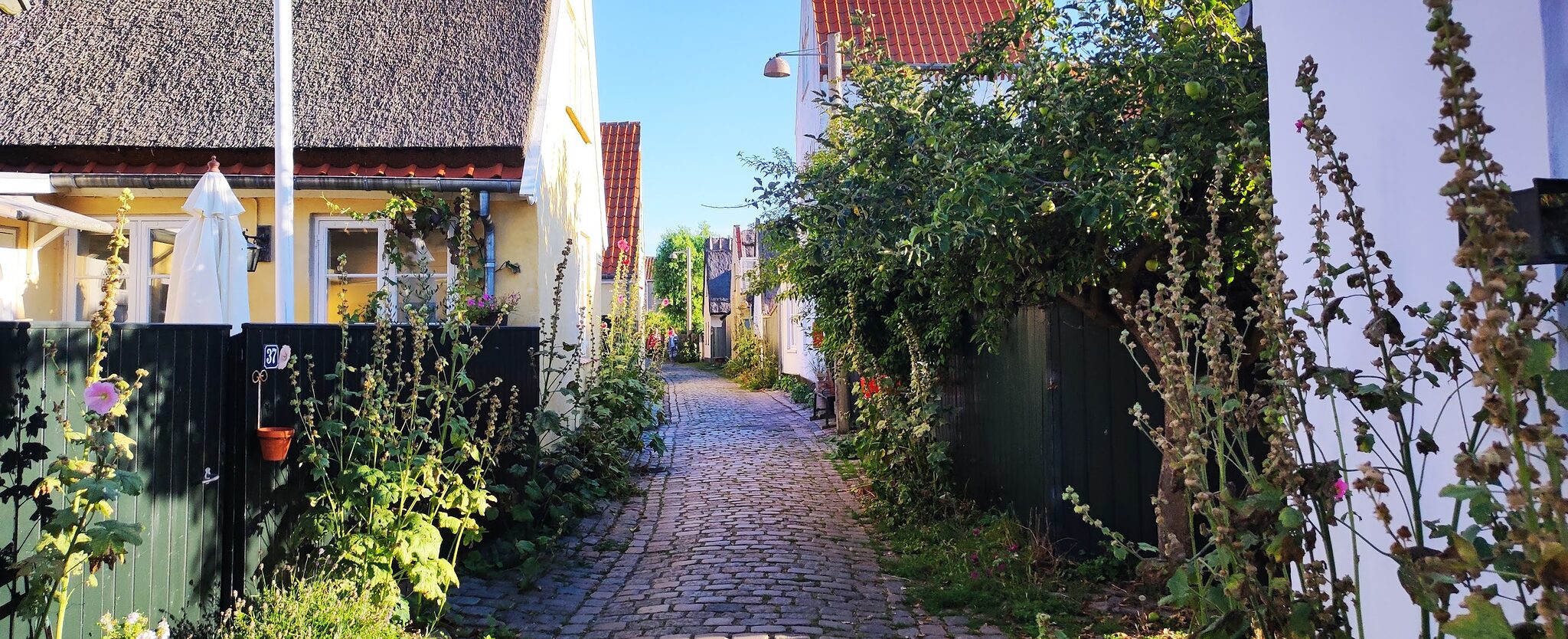
We held six of these retreats over the past years, starting with Helenekilde in 2015, then Dragør (‘22), Świnoujście (‘23, ‘26), and Sandbjerg Gods (‘24 and ‘25). There is a tentative plan to go to Eckebacken in Southern Sweden in 2027. The post captures “the way we do it”, for folks that are seeking to design their own retreats. There is a photo from each of these retreats on this page.
Why?

Sandbjerg Gods, May 2025.
The primary goal is to accelerate research for the entire research group, juniors and seniors alike. For juniors (PhD students, assistants, postdocs) it is meant to be a motivating event, when a spell of dedicated time with accountability helps to deliver work, and break writing blocks. For seniors (faculty) it is really a retreat, an escape from other duties to create space reserved for research.
Another goal is to understand who is working on what, so an update on research activities. This goal is secondary. We are not interested in a comprehensive mini-conference, in which most people doze off most of the time.
Specifically, increasing within-group interaction, starting new collaborations, organizing supervision meetings, etc., are non-goals. Neither are creating vision and mission statements, or achieving a strategic objective set by the upper management or the head of the research group. I strongly believe that diligent research should dominate researcher’s time. Strategic ideas should be developed in other spaces, possibly by writing grant proposals, and not by getting the attention of the whole group, which in aggregation is very expensive, and not equally useful to people at all career stages. So no top-down goals, but concrete progress according to a bottom-up constructed plan.
This does not mean that research group bonding and interaction does not happen. It does, but mostly thanks to secondary means: common meals, sharing entertainment time, walk-and-talk plan and short research presentations.
How? The Format
We create dedicated time for work, with lightweight social pressure, accountability mechanisms, and easy access to supervisors and colleagues. This, I hope, creates the desired acceleration of research work.
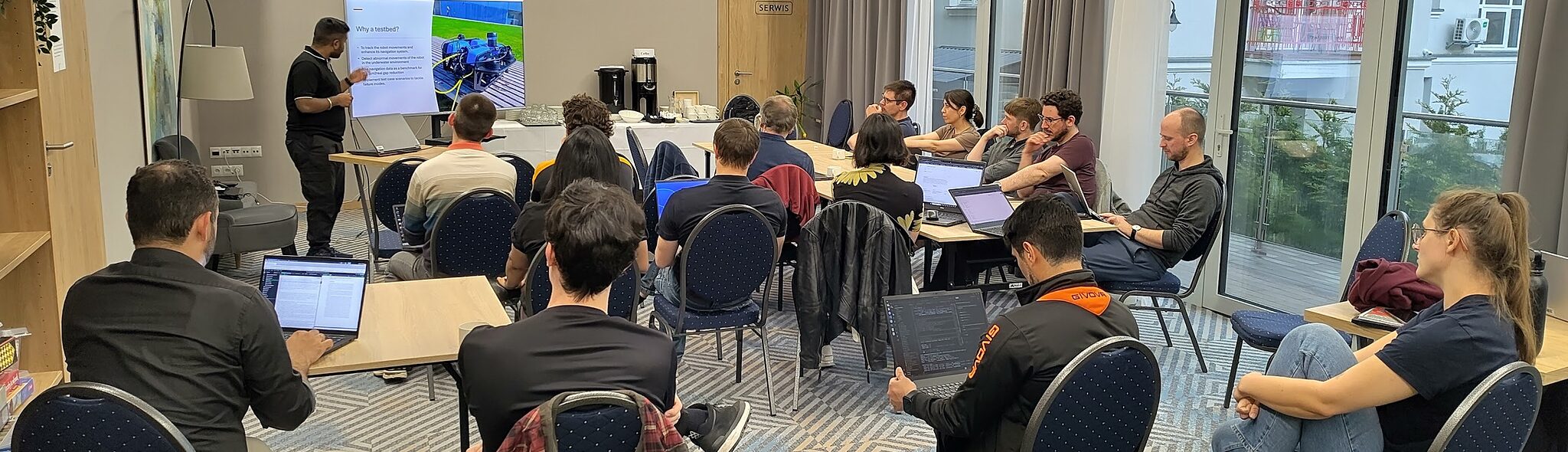
- Shut-up-and-write: Most of the time is used for writing and programming. We book a common room where we sit together and work. Coffee and snacks are provided. We make sure that everyone has a clear task to work on. You are still allowed to work from other spaces, depending on personal preferences, and some do. We do not monitor what participants do. It is fine to go for a walk, to the beach, or for a swim or a run. Freedom is essential, although in practice almost everyone just chooses to work :) In fact, many of us get so immersed that we continue late into the night or restart early in the morning. The 7–8 half-day shut-up-and-write sessions take up most of the retreat.
- Walk and Talk: Once a day, in about four 30–45 minute sessions, everybody meets one-on-one with someone else. In the past we used both rotating pairs, and fixed pairs for the week. Both work. These meetings help create accountability (have you made progress today?) and connections in the group (what are you working on in general these days?). Most of these conversations take place outdoors: in nature, in town, etc.
- Research Talks: Each participant is required to give a short talk in a free format (slides are not required; 15 minutes). We offer longer slots to guests, and organize one talk about the research process, with the aim of helping PhD students. In the past, the student-oriented sessions covered stress and inclusivity, the writing process, and giving talks. The member preparing this talk is, of course, free to skip giving a research talk. In general, we do not want talks to dominate, and we do not want people to work on their slides, instead of their main research objective for the week. We schedule some presentations on the first morning, as a kick-off, and the rest after dinner, for 1–2 hours per evening.
- Social interactions: Joint meals, sports (running, swimming, hiking), game and fun sessions (typically bottom-up, organized by the PhD students), bar visits, etc. A small social event was a nice add-on in some years: a joint dinner in a better restaurant, a beach volleyball game, group photo, or a short hike. These in-between activities, together with joint travel, contribute greatly to team building.
- No distractions otherwise: We block the week in the calendar about a year ahead and decline meetings. We discourage Zoom calls.
We do not include Dagstuhl-style long brainstorming breakouts in the program. They sometimes happen ad hoc, when someone’s work gets stuck or when a discussion naturally emerges, but they are not the main format. Some colleagues were surprised that we travel to spend time together and then use most of the time not talking to each other. Well, what can I say—we just have a different purpose: getting things done. The conversations happen around the work, in walks, meals, coffee breaks, and late-evening discussions, not replacing work.
For Whom?
We want everybody who is employed in the group to join. Broad participation is important for the main goals: impact on research productivity and team building. All PhD students, postdocs, and faculty in the group are invited. We also include some part-time employees, for instance student programmers, if they are active in the period, or if we want to lure them into a PhD studentship. We also include external members who are not employed at ITU but have an affiliation with us: industrial PhD students and postdocs, as well as their company supervisors. The externally affiliated group members spend time at ITU only occasionally, so this is one time a year when the broad team can meet in one place. I find it very rewarding.
Finally, we always add 1–2 external guests, usually collaborators in current research projects, papers, or grant proposals. This brings external inspiration in both directions. Typically, the guests are somewhat senior, which helps to avoid the silo effect: the group of senior members of SQUARE changes slowly, so there is a risk of stagnation. Often, we invite guests so that the PhD students and postdocs who collaborate with them can accelerate their work during the week, thanks to easier and more frequent contact.
One issue is that this format does not scale to a very large group. Our last group of 20-ish participants is getting close to a maximum that still sustains a working attitude (as opposed to a noisy crowd). I hope we are not growing more, and the size of the group might affect the participation in the future.
Świnoujście, May 2026
When?
Świnoujście, August 2023.
I have grown very fond of a full week (5 days) that does not encroach on the weekend. Arrival on Sunday evening, as at Dagstuhl, is fine if it cannot be avoided. Each year, several papers get created or seriously accelerated during the retreat. A short retreat works if the goal is intense interaction. But for a work retreat, things need time to unfold. Developing paper-worthy material takes time; a day or two is not enough. In the past, we had to shift the retreat to the weekend because of limited room availability. I learned then that motivating myself and others to work effectively during the weekend is much harder. We all just want to get home. Since then, we book early enough to get the weekdays.
My experience is that a retreat should not be scheduled during a relaxed period of the year, such as summer or winter break. These periods are already reserved for vacation and, if not, they are excellent research periods when we can work undisturbed. A retreat has a stronger effect during a relatively busy part of the academic year, when teaching-related and admin-related meetings disturb us a lot. A full meeting-free week (calendar block) refocuses us on research when this normally does not happen. The retreat is not meant to just move research to another location; it should add to the research time budget. At ITU, we have found that the three weeks right after lectures end and before the written exams start are optimal, which means mid-to-late May for us. Before that, people are too busy with lectures; after that, they are too busy with exams (both non-negotiable). A nice side effect is that we avoid the peak tourist season at most locations.
Where?
Ideally, the location should support immersion without making the logistics too painful. Biking distance, or ordinary local-transport distance from Copenhagen, is too close. It tempts people to go back home in the afternoon. I understand the excellent reasons for doing this, but it breaks immersion. I prefer to lose a little on participation, if that gives us better immersion.
We have sometimes gone a bit further, to Świnoujście, because the trip, even though longish, can itself become useful. The ferry gives us an extended work time. The group starts to bond already on the way, and people usually also work on their retreat tasks on the way there and back.
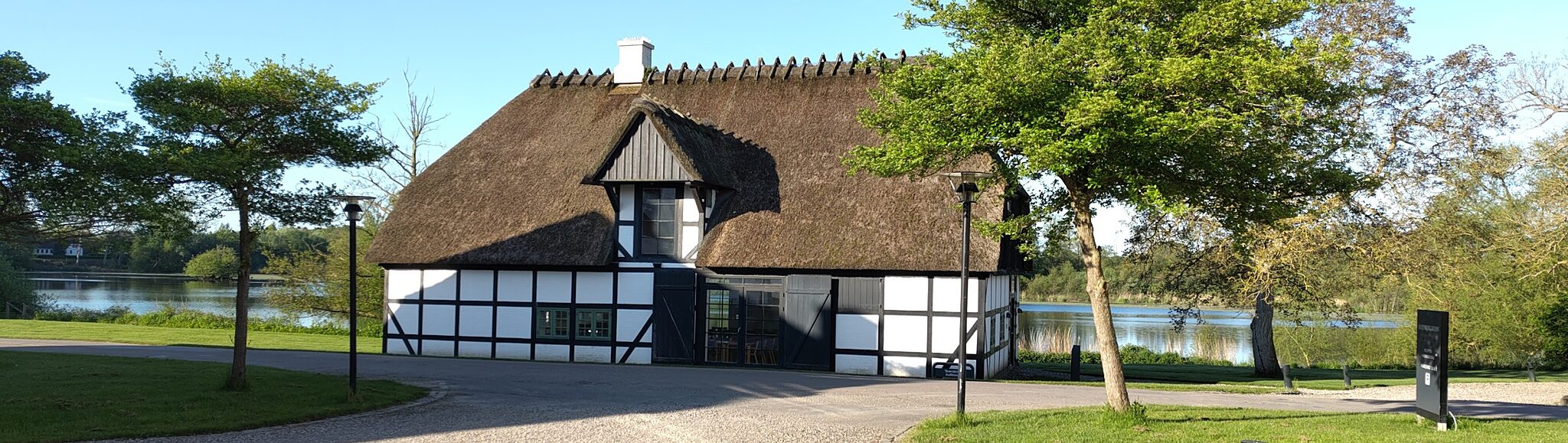
Some of us like remote, rural, natural locations, for instance Sandbjerg Gods, which gives a Dagstuhl-like sense of isolation. Several younger group members prefer small towns with convenience stores, small restaurants and cafés, and some limited night entertainment. Both kinds of locations have worked well for us so far. We avoid big cities.
I find it very useful to reuse the same location multiple times. In fact, my dream is to find an ideal location and just continue using it. So far this dream has only been partly achieved. Perhaps we have not found the ideal location yet, or perhaps some of us are too eager to try new things. Anyway, every year I start the discussion of where to go with the list of places we already know.
Finding a new location every year is a burden for organizers and participants. With a familiar location, there is no need to understand travel connections, coordinate trips from scratch, or renegotiate every detail with the hotel. The group becomes more autonomous and requires less coordination. There is also a lower risk of mishaps: too small a meeting room, too bad food, noise, low comfort, etc. Finally, the same location helps habitualize the mode of operation. Once we arrive at a familiar retreat location, our minds immediately get into retreat mode.
Sandbjerg Gods, May 2024
Retreat Outside the Retreat (Preparation)
Let us start with the timeline.
About a year before: soon after the previous retreat set the date, choose the location, and make a tentative hotel booking for fixed dates and roughly last year’s number of participants, adjusted for expected changes in group size (projects starting and ending, graduations, new hires).
3–5 months before the event: This is when hotels often want a commitment. Collect registrations from folks in a spreadsheet, confirm the number of rooms with the hotel, and pay an advance, if needed. ITU needs an invoice for this, not a pro-forma invoice, which many hotels send by default. In my experience, hotels allow for some flexibility at this point. We typically keep 2–3 unallocated rooms reserved for late joiners and guests.
2–3 months before: Discuss possible guests with the other faculty in the group, create a ranked list, and start inviting them in order (we typically do not want more than two guests). We usually offer to pay board and accommodation, but ask guests to plan and cover the travel themselves. Soon after, we also send an email with the time bounds of the schedule and ask folks to arrange travel. The default is that everybody arranges their own travel (there is too much variation to centralize this), but often people cluster in groups that travel from similar locations. We collect transportation times and means in the registration spreadsheet, so that people can coordinate if they want to.
2–4 weeks before: The format works best when everyone arrives with something concrete to do. Folks also need to have their talk prepared, so that they do not work on it during the retreat. We collect planned tasks and talk titles, typically in the same shared spreadsheet where we keep registration. This gives enough time to coordinate, as some people will have shared tasks, and juniors might want to consult with co-supervisors. Talks often need to be coordinated too, as we coauthor much work.
1 week before: Finalize the schedule. Make a plan for walk-and-talk pairings, so that folks can consult the spreadsheet to see with whom to meet for these sessions.
An example week looks roughly as follows:
Sunday: Arrive before dinner. After dinner, prepare the working room and start the retreat: welcome, practical information, an introduction round, everyone publicly declares their work task for the week (accountability!), and perhaps a research talk if there is time.
Monday morning: Start with about two hours of talks, preferably by visitors (keynote-style), then move into shut-up-and-write.
Monday to Friday: Shut-up-and-write before and after lunch. Walk-and-talk happens daily, usually 30 minutes before dinner. Research talks take place after dinner, typically for 1–2 hours. One evening is PhD-student oriented. Drinks, games, walks, and long night conversations happen after the talks.
Friday after lunch: Short debriefing, including a public check-out on whether people achieved their goals. Then departure.
A few other practical points matter as much as the timing.
What tasks work? The format is not optimized for vague exploration. It works best for finishing things, rewriting texts, programming concrete features, fixing bugs in research code, or reading a specific body of work. The key is to bring everything you need for the task: a laptop with a working build environment, a reference list, paper printouts, etc. Some scaffolding therefore needs to be done before you travel.
Finances: We piece together project money, department support, and accounts controlled by individual group members (pocket accounts, individual projects, etc.). Travel is paid by each participant from an account they control. This greatly simplifies the financial logistics. Otherwise the person handling the travel payment would have to deal with too many special cases. Pretty much every person has their own constraints on time, starting point, route, etc. We do not want to make anybody suffer learning that. Accommodation, board, and meeting rooms are paid centrally by the group from department and project funds.
Modeling cost: Sending about 20 people to travel together for a week is not cheap. Cost is always a key selection criterion for locations, both in time and money. To compare locations, I use a simple model. First, we estimate the typical per-person travel cost from Copenhagen, not using the cheapest possible tickets, since some people travel from more expensive locations, book late, etc. Then we compare hotel offers by calculating the average per-person daily cost for a given group size, including all costs charged by the hotel, for instance meeting rooms. The model is fairly noisy, but it helps estimate which locations are actually cheaper. Often the cheap locations per day are quite expensive per trip, so this has helped us make sound decisions in the past.
I am genuinely proud of these retreats. They are simple in design, but they have become one of the most important things we do as a group.
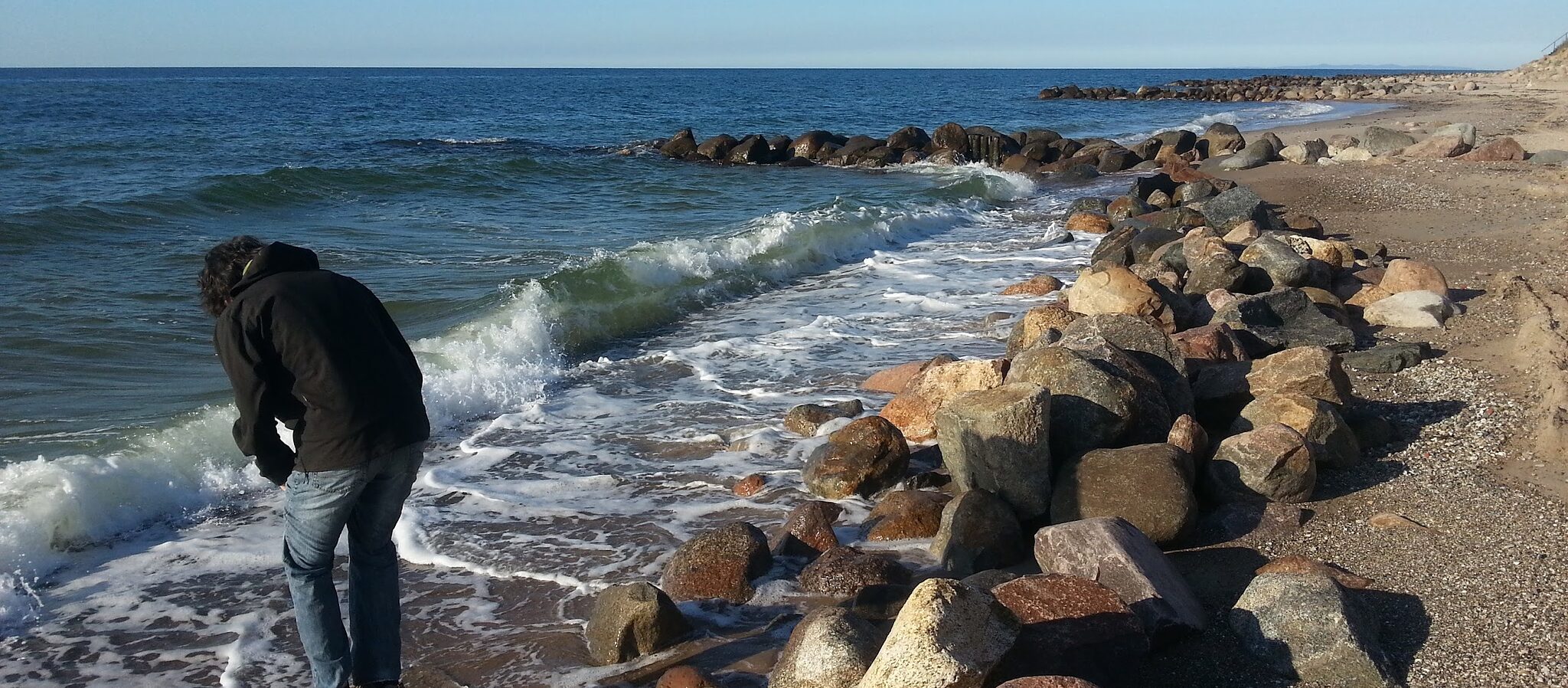
Helenekilde, 2015 — our first retreat, before SQUARE was called SQUARE.
Credits. The design emerged from contributions and experiences from the RWTH Aachen MOVES group (they run fabulous retreats), Claus Brabrand, Christoph Seidl, Mahsa Varshosaz, Raul Pardo, Eduard Kamburjan, Peter Sestoft, Debasmita Lohar, Einar Broch Johnsen, Irina Shklovski and the HCI Section at the University of Copenhagen.